

How can automating evidence collection save your compliance team time across multiple frameworks?
Automating evidence collection saves time by capturing proof continuously and mapping it to multiple frameworks at once. KeelGRC uses a crosswalk-native architecture so that a single piece of evidence satisfies requirements across SOC 2, ISO 27001, and other standards. This approach eliminates the need to rebuild the same artifacts for every new audit, allowing small teams to maintain compliance without a dedicated department.
The Hidden Cost of Manual Evidence Gathering
Manual evidence collection is the primary driver of audit fatigue. Teams often spend weeks gathering screenshots, logs, and policy documents just before an audit window opens. This reactive approach creates a scramble that distracts engineers from product development. The time spent chasing owners for specific artifacts is rarely tracked but significantly impacts operational efficiency.
When a team manages multiple frameworks, the manual burden multiplies. A control that satisfies both SOC 2 and ISO 27001 is often treated as two separate tasks in spreadsheet-based systems. This duplication means the same work is performed twice, with no shared context. The result is a compliance program that feels like a series of disjointed projects rather than a unified system.
KeelGRC addresses this by treating evidence as a continuous asset. Instead of a one-time snapshot, the platform monitors control status and evidence freshness on an ongoing basis. This shift from annual scramble to continuous maintenance reduces the peak workload during audit periods. Teams can focus on closing gaps rather than hunting for proof.
Crosswalk-Native Architecture: One Control, Many Frameworks
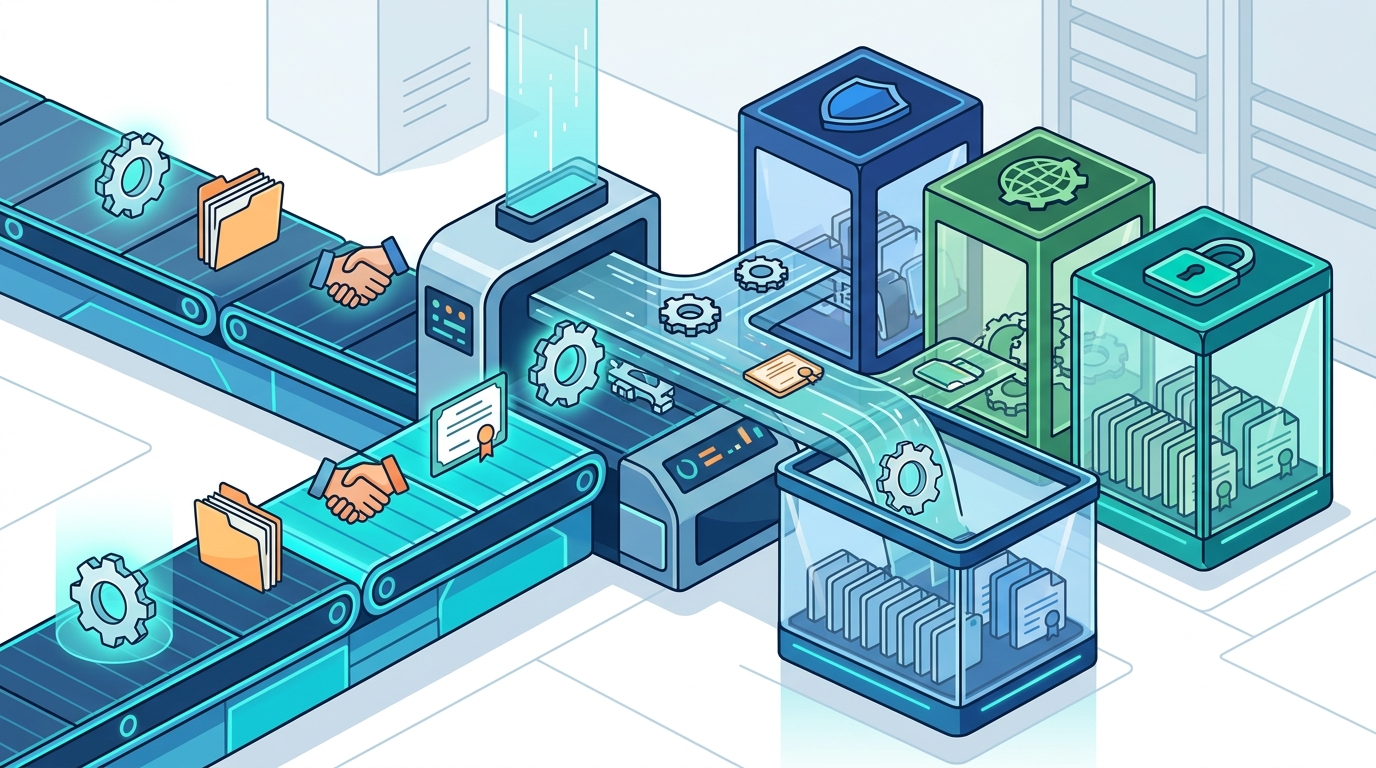
Crosswalk-native GRC is an architecture where controls are the primary unit of work, and frameworks are views over those controls. In this model, a single control satisfies clauses across every framework it is mapped to. This is distinct from checklist-based tools where each framework is a separate list. The crosswalk is the foundation, not a report generated at the end.
KeelGRC maps a single control and evidence graph across 25+ frameworks. For example, a multi-factor authentication control can satisfy requirements in SOC 2, ISO 27001, and NIST CSF simultaneously. When you collect evidence for that control, it counts toward all three standards. This reuse is the core mechanism that saves time. You do the work once, and the platform handles the mapping.
The implication for teams is a significant reduction in onboarding time for new frameworks. Adding a second framework is not a second project. It is a data update that reuses existing controls and evidence. This allows organizations to expand their compliance posture without a proportional increase in headcount or effort.
Automated Collection Mechanisms and Continuous Monitoring
Continuous monitoring is the practice of automatically checking that controls are in place and operating as intended. It closes the gap between point-in-time audits and the continuous nature of risk. By watching configurations, access, and evidence freshness, the platform flags drift before it becomes an audit exception. This proactive approach ensures that the evidence you present is always current.
KeelGRC uses automated checks to test public HTTPS and DNS setups every six hours. It also runs open-source tests against Microsoft 365 tenants daily. Read-only collectors for GitHub, Okta, and AWS check identity and configuration settings and record results on the mapped controls. These automated feeds provide a steady stream of fresh evidence. The platform flags any evidence that has gone stale, ensuring that a Type II audit window is covered as it happens.
This level of automation removes the manual burden of screenshotting and uploading. The evidence arrives on a schedule, linked to the correct control. Teams can review the automated results and intervene only when a check fails. This human-in-the-loop model ensures accuracy while maximizing efficiency.
AI-Assisted Evidence Review and Gap Detection
AI compliance software applies artificial intelligence to the slowest parts of a compliance program. It drafts policies, maps requirements to controls, and flags gaps before an auditor does. The goal is not to replace human judgment but to remove the hours of copying and cross-referencing. AI tools can read existing policies and evidence to understand how one framework maps to another.
KeelGRC includes AI Insights that compute readiness gaps, overdue access reviews, and policy overlaps automatically. This analysis runs on live data and costs zero credits for the standard breakdown. When a team needs a deeper look, an on-demand deep pass adds a board-ready narrative and a prioritized plan. This tiered approach ensures that AI is used where it adds the most value.
The benefit of AI-assisted review is a faster path to readiness. Instead of manually checking every control, the platform highlights what needs attention. Each finding is linked to the screen where you can fix it. This direct connection between insight and action reduces the time spent navigating the platform. It turns a dashboard into a to-do list.
Strategic Implications for Small and Mid-Sized Teams
For small and mid-sized businesses, the strategic implication of automated evidence collection is scalability. A self-serve platform allows a founder or lean security team to run a real program without a consultant. The tool must be affordable, fast to stand up, and capable of handling multiple frameworks. KeelGRC is designed for this specific use case, with transparent pricing and no mandatory onboarding fees.
The ability to export data is also a critical strategic factor. KeelGRC provides an open-source tool that exports registers, policies, and evidence to a neutral bundle. This portability ensures that your program is yours. You are not locked into a proprietary format that becomes useless if you switch tools. This respect for ownership is a key differentiator in the GRC market.
By automating the busywork, teams can focus on the judgment calls that software cannot make. Risk decisions, policy approvals, and attestations remain human responsibilities. The platform handles the labor, while people remain accountable for the result. This balance is essential for building a sustainable compliance culture.
Key Takeaways
- Automating evidence collection shifts compliance from an annual scramble to a continuously maintained state.
- Crosswalk-native architecture allows a single piece of evidence to satisfy multiple frameworks, reducing duplicate work.
- Continuous monitoring flags drift and stale evidence in near real time, preventing audit exceptions.
- AI-assisted tools can draft policies and identify gaps, but human review remains essential for final approval.
- Transparent pricing and self-serve setup make advanced GRC capabilities accessible to small teams.
- Data portability ensures that your compliance program remains an asset, not a liability, if you change tools.
Frequently Asked Questions
What is a compliance crosswalk?
A compliance crosswalk is a mapping that shows how a single control satisfies the requirements of multiple frameworks at once. It allows evidence collected for one framework to be reused for others instead of being rebuilt from scratch.
How does continuous monitoring differ from a traditional audit?
Continuous monitoring is the ongoing, automated checking of controls and evidence so that drift is caught in near real time. Traditional audits are point-in-time assessments that may miss issues that occur between audit dates.
Can a small business use automated evidence collection without a dedicated team?
Yes. Self-serve GRC platforms are designed for small teams. They automate the heavy lifting of evidence collection and mapping, allowing a founder or IT lead to manage the program without hiring a compliance specialist.
What types of evidence can be automated?
Automated evidence includes system configuration logs, access review records, and security scan results. These artifacts are collected via integrations with cloud providers and identity platforms, ensuring they are always current.
Is AI used to make compliance decisions?
No. AI assists by drafting documents and flagging gaps, but it does not make final decisions. Humans remain accountable for approving policies and attesting to the truth of the evidence.
Conclusion
Automating evidence collection is not just a convenience; it is a strategic necessity for teams managing multiple frameworks. By leveraging a crosswalk-native platform, you can collect evidence once and comply everywhere. KeelGRC provides the tools to make this possible, with transparent pricing and a focus on human accountability. To start your compliance journey, visit KeelGRC and explore how you can get audit-ready and prove it.