

A truly free GRC platform is a software tool that allows organizations to manage governance, risk, and compliance without paying a subscription fee. It provides core features like control mapping and evidence collection at no cost. This article examines the Eramba Community Edition to define what free compliance software actually delivers in a real-world environment. For additional details, review the Support Keel.
Defining the Free GRC Landscape
GRC software is a category of tools designed to help organizations manage their compliance obligations, risk profiles, and governance processes. In the commercial market, most tools operate on a subscription model that scales with the number of users or frameworks. However, a free tier or a community edition represents a different value proposition. It aims to provide the foundational architecture of a compliance program without a financial barrier to entry.
The Eramba Community Edition Model
The Community Edition includes core modules for risk management, compliance, and audit. Users can define their own risk registers, map controls to frameworks, and track remediation tasks. The open-source nature of Eramba means that the code is transparent, which builds trust with security-conscious teams. However, it also means that users are responsible for their own hosting, maintenance, and security of the instance.
Core Capabilities in Practice
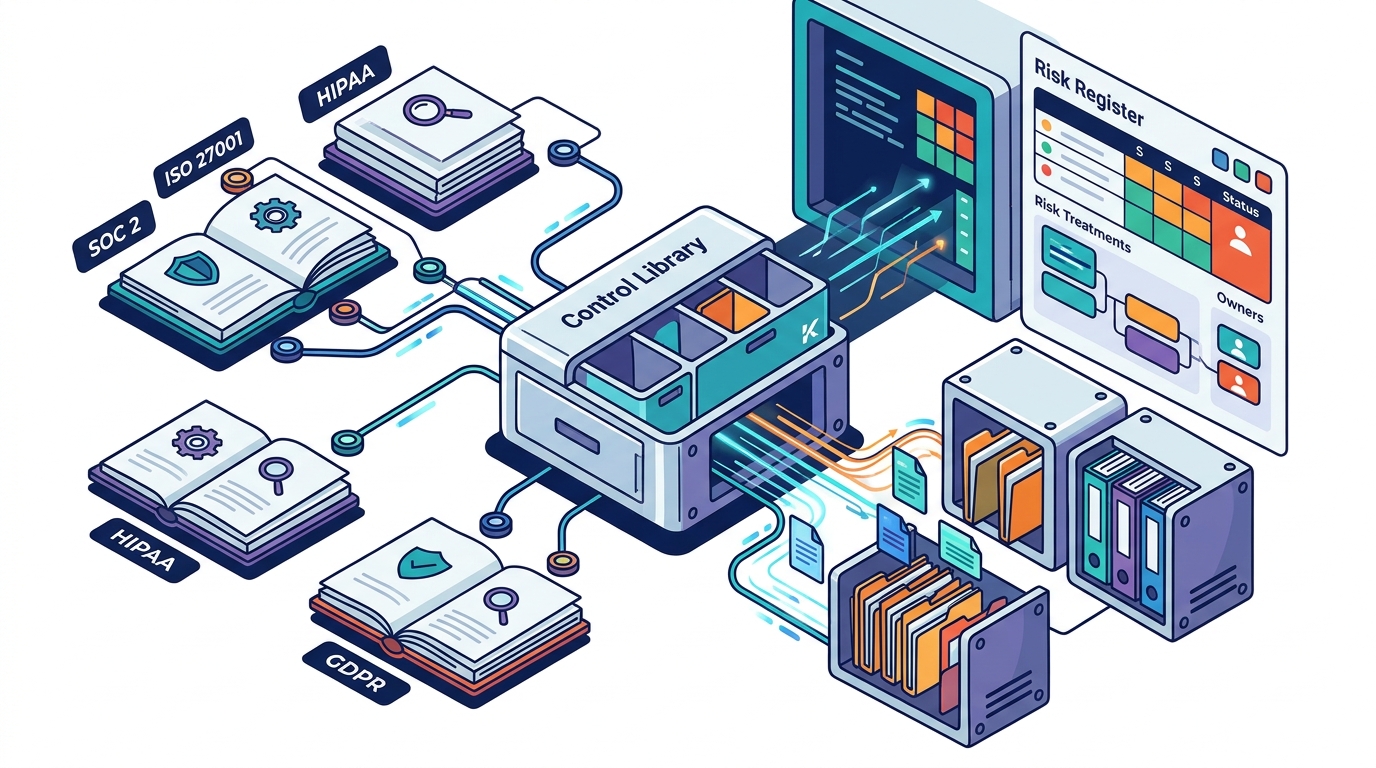
In practice, a free GRC platform like Eramba provides the structural backbone of a compliance program. It allows teams to create a risk register where they can log identified risks, assign owners, and track mitigation strategies. The platform supports the mapping of these risks to specific compliance frameworks, such as ISO 27001 or SOC 2. This mapping is essential for demonstrating how an organization addresses its regulatory obligations.
Evidence collection is another critical capability. A free platform must allow users to attach artifacts, such as screenshots or policy documents, to specific controls. This creates an audit trail that auditors can review. While the free version may lack automated integrations with cloud providers, it still provides the manual workflow necessary to gather and store evidence. This manual approach requires more effort but offers full control over the data.
Limitations and Operational Realities
While the cost is zero, the operational burden of a free GRC platform is not. Users must manage the server infrastructure, handle software updates, and ensure data backups. This technical overhead can be a significant challenge for teams without dedicated IT resources. The lack of vendor support means that if the software encounters a bug or a security vulnerability, the user must resolve it independently or rely on the community forum.
Comparing Free and Paid Solutions
When comparing a free platform like Eramba to paid solutions, the primary difference is the level of automation and support. Paid platforms typically offer a managed service, where the vendor handles hosting, updates, and security. They also provide dedicated customer support and automated integrations with major cloud and SaaS providers. This reduces the operational burden on the compliance team and allows them to focus on the strategic aspects of compliance.
For organizations that are just starting their compliance journey, a free platform can be an excellent starting point. It allows them to learn the fundamentals of GRC without a significant financial commitment. As the organization grows and its compliance needs become more complex, they can migrate to a paid platform. This phased approach ensures that they are not paying for features they do not yet need.
Key Takeaways
- A truly free GRC platform provides core features like risk registers and control mapping at no cost.
- Eramba Community Edition is a prominent example of an open-source, free GRC solution.
- Free platforms require users to manage their own hosting, security, and maintenance.
- Lack of automated integrations in free tiers means more manual evidence collection.
- Free solutions are ideal for early-stage organizations building their compliance foundation.
- The operational burden of a free platform can be high for teams without IT resources.
Frequently Asked Questions
Is Eramba Community Edition really free?
Yes, the Eramba Community Edition is free to download and use. It is an open-source project, and there are no licensing fees associated with its use.
What is the main difference between a free GRC platform and a paid one?
The main difference is the level of automation and support. Paid platforms offer managed hosting, automated integrations, and dedicated support, while free platforms require users to handle these aspects themselves.
Can I use a free GRC platform for SOC 2 compliance?
Yes, you can use a free platform to manage the controls and evidence required for SOC 2. However, you will need to manually collect and upload evidence, as automated integrations may not be available.
Do I need technical skills to use a free GRC platform?
Yes, you need some technical skills to host and maintain a free GRC platform. You will be responsible for server management, software updates, and data backups.
Is it safe to use an open-source GRC platform?
Open-source platforms can be safe if properly configured and maintained. The transparency of the code allows for security audits, but you are responsible for applying security patches and updates.
When should I switch from a free to a paid GRC platform?
You should consider switching when your compliance needs become more complex, such as when you need automated integrations or when the manual effort of managing the free platform becomes too burdensome.
Conclusion
A truly free GRC platform like the Eramba Community Edition offers a viable path for organizations to begin their compliance journey. It provides the essential tools for risk management and control mapping without a financial barrier. However, users must be prepared to take on the operational responsibilities of hosting and maintaining the software. For early-stage teams, this trade-off can be a valuable way to build compliance capabilities while managing costs.
As your organization grows, you may find that the manual effort required to manage a free platform becomes a bottleneck. At that point, transitioning to a managed solution can provide the automation and support needed to scale your compliance program. For now, KeelGRC offers a transparent, self-serve approach that allows you to get audit-ready and prove it, ensuring you have the right tools for your current stage of growth. Explore KeelGRC to see how you can build a robust compliance program that fits your needs.