

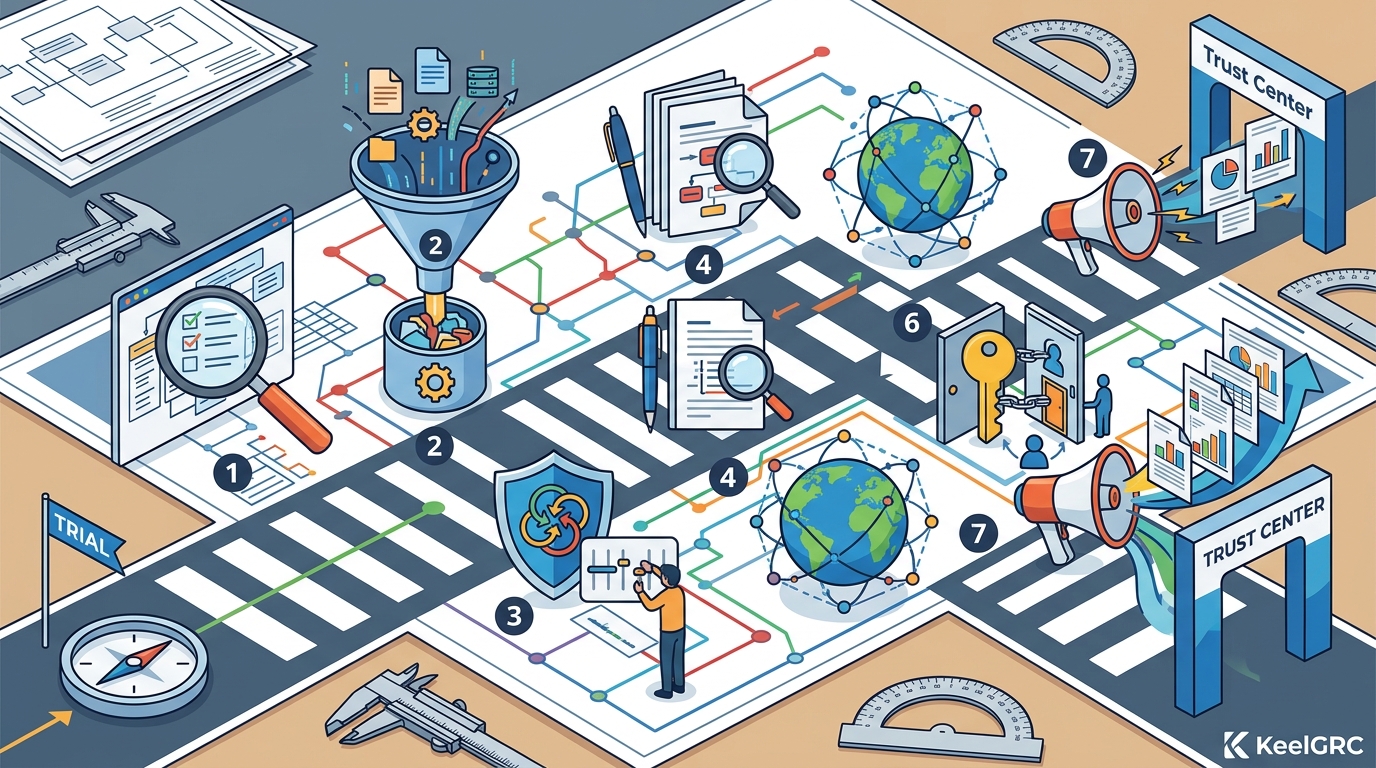
Choosing a governance, risk, and compliance (GRC) platform is a significant operational decision that requires more than a surface-level demo. A free trial provides the critical window to test whether a tool actually fits your team's workflow, data structure, and compliance goals. KeelGRC emphasizes that the best trial experience involves loading real data and testing core capabilities rather than just clicking through a pre-built sample workspace. This listicle outlines the seven essential capabilities you must verify before committing to a paid subscription. according to Systematic review of
1. Framework Crosswalking and Control Reuse
Verify that one control satisfies multiple frameworks to avoid duplicate work. A true crosswalk-native platform maps a single control to every applicable framework requirement, such as SOC 2 and ISO 27001. This architecture ensures that evidence collected once counts toward multiple compliance goals. If the tool requires you to duplicate controls or evidence for each framework, it will significantly increase your operational overhead as your compliance scope grows.
2. Evidence Collection and Automation
Test how easily evidence arrives without manual uploads. Modern GRC platforms should integrate with your existing cloud and security tools to pull evidence automatically. During your trial, connect at least one integration to see if the system can capture logs, screenshots, or configuration data on a schedule. Manual evidence collection is a primary cause of compliance fatigue, so automation depth is a critical differentiator for long-term success.
3. Risk Register and Control Linkage
Ensure risks are directly linked to the controls that treat them. A risk register is not just a list of potential threats; it is a dynamic system that scores likelihood and impact. You should be able to see which specific controls mitigate each identified risk. This linkage is vital for auditors who need to understand the relationship between your risk appetite and your security posture.
4. Policy Management and Version Control
Check if you can draft, approve, and export policies as branded PDFs. Policy management is a core component of any compliance program, and the tool should make it easy to keep documents current. Look for features that track owners, review dates, and approval workflows. The ability to export policies in a professional format is essential for sharing them with customers, auditors, and internal stakeholders.
5. Vendor Risk Management
Evaluate how the platform tracks third-party criticality and review cadences. Your supply chain is only as secure as your least secure vendor. The platform should allow you to categorize vendors by criticality and schedule reviews based on that risk level. During the trial, add a few of your real vendors to see if the workflow for collecting and reviewing their security questionnaires is intuitive and efficient.
6. Auditor Access and Collaboration
Invite your auditor to the platform to test their user experience. A GRC tool is only as good as its ability to facilitate the audit process. Check if the platform offers free auditor seats that do not count against your paid user limit. Your auditor should be able to review evidence, leave comments, and request additional documentation directly within the tool, which streamlines the final audit phase.
7. Data Portability and Export
Confirm you can export your data in an open, usable format. Data lock-in is a major risk when choosing compliance software. You should be able to export your controls, policies, and evidence files as real bytes, not just links that break when you cancel. A platform that respects your data ownership will provide documented export options and open formats, ensuring you can migrate to a new tool without losing your work.
Choosing the Right Platform
When evaluating these capabilities, prioritize the features that address your most immediate compliance pain points. If you are managing multiple frameworks, crosswalking is your top priority. If you are struggling with manual evidence collection, focus on integrations. Use the trial period to load your real data and test these workflows with your actual team to ensure the platform fits your specific operational reality.
Frequently Asked Questions
How long should a GRC platform trial last?
A standard trial period is typically 14 days, which is enough time to load real data and test core workflows. You should use this time to connect integrations and invite key stakeholders, including your auditor, to ensure the platform fits your team's needs.
Do I need a credit card to start a free trial?
Many modern GRC platforms, including KeelGRC, offer free trials or free plans that do not require a credit card. This allows you to test the software without the risk of automatic billing if you decide not to purchase.
What is the difference between a free plan and a free trial?
A free plan is a permanent tier with limited features and no end date, while a free trial unlocks a paid plan for a fixed number of days. A free plan is good for getting started, but a trial is better for testing the full capabilities of a paid tier.
Can I export my data if I leave the platform?
Yes, you should be able to export your data in an open format. Look for platforms that provide documented export options for your controls, policies, and evidence files to ensure you are not locked into a proprietary system.
How do I test the auditor experience during a trial?
Invite your auditor to the platform using a free auditor seat. Ask them to review a sample of your evidence and leave comments to see if the workflow is intuitive and efficient for their needs.