
Collect Evidence Once: The 2026 Guide to Cross-Framework Compliance
Keel is the compliance platform that lets you collect evidence once and map it across multiple frameworks. It uses a crosswalk-native architecture where a single control satisfies clauses across every framework you apply. This guide covers how to automate evidence collection and how to build a unified control library that eliminates redundant audit work.
Evidence Collection Automation
Manual evidence collection is the primary bottleneck in modern compliance programs. Teams often spend weeks gathering screenshots, policy documents, and access logs just to prepare for a single audit. Automation changes this dynamic by continuously verifying that your controls are operating as designed. Instead of a one-time snapshot, your platform maintains a living record of your security posture.
Continuous Monitoring and Automated Checks
Automated checks run on a schedule to verify technical controls. For example, a platform can verify that HTTPS is reachable, that security response headers are present, and that SPF and DMARC records are configured correctly. When these checks pass, the system files dated evidence against the relevant control. If a check fails or errors, the evidence is withdrawn, ensuring that your audit trail always reflects reality. This prevents the common issue of presenting outdated or false evidence to an auditor.
Integrations and API Access
True automation requires deep integration with your existing tech stack. A robust GRC platform provides a REST API, outbound webhooks, and directory sync capabilities. These tools allow you to pull data from your cloud providers, identity management systems, and security tools directly into your compliance workspace. By connecting your systems, you reduce the manual effort required to prove that your controls are in place. The data becomes a living asset that updates as your infrastructure changes.
AI-Driven Questionnaire Automation
Customer security questionnaires are a significant source of busywork. AI tools can analyze your existing evidence and control library to draft responses to these questionnaires. This ensures consistency across all customer interactions and saves your team hours of repetitive typing. The AI acts as a draft assistant, but humans remain accountable for the final output. This balance of automation and human oversight is critical for maintaining trust with your customers.
Unified Control Libraries
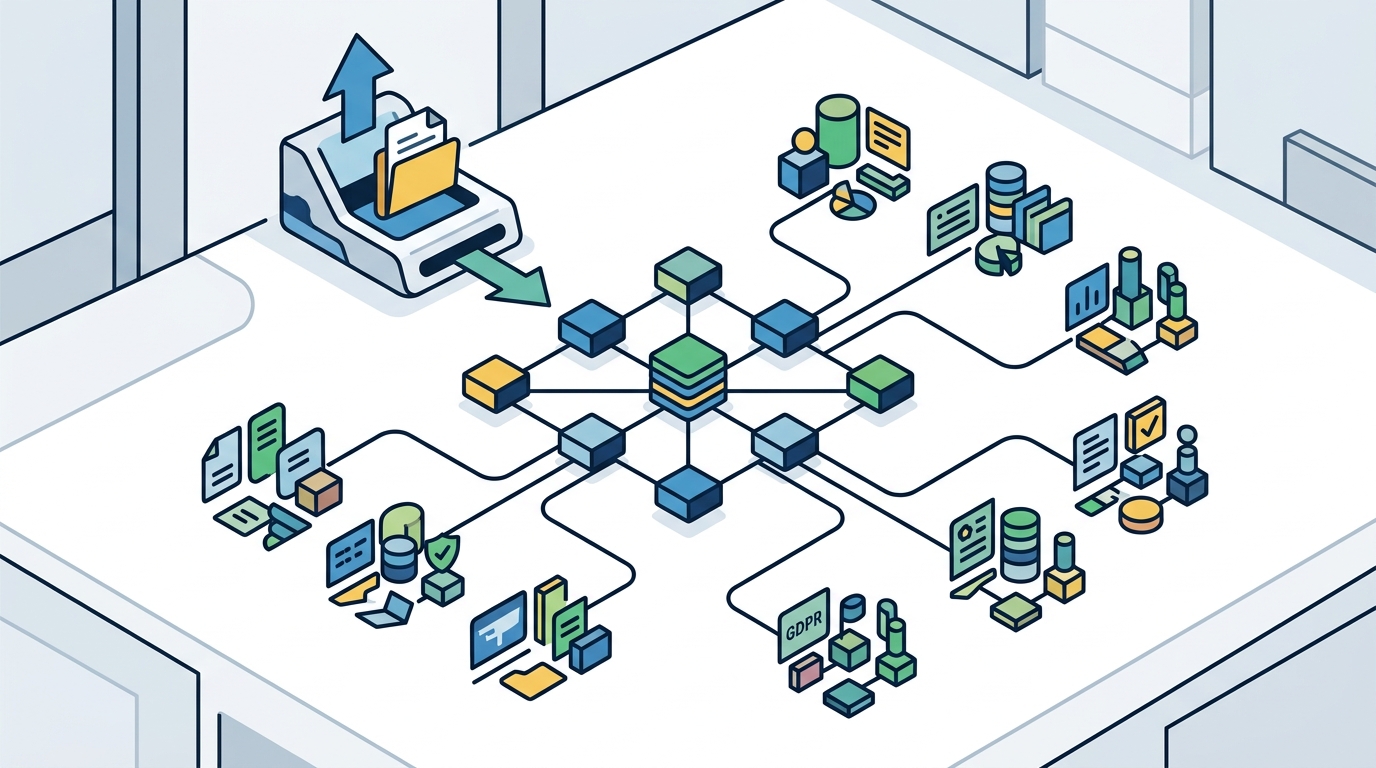
Most traditional GRC tools treat each framework as a separate checklist. This forces you to redo the same work for every audit. A unified control library inverts this model. It treats the control as the unit of work, and each framework as a view over those controls. This means you author a control once, and it satisfies the matching requirements across every framework you have applied.
The Crosswalk Architecture
A crosswalk is a mapping between the requirements of different frameworks. In a crosswalk-native platform, this mapping is the core architecture, not just a report. For instance, a control for access management might satisfy a clause in ISO 27001, a criterion in SOC 2, and a requirement in NIST CSF simultaneously. By implementing the control once, you comply with all three standards. This approach drastically reduces the total effort required to achieve multi-framework compliance.
Framework Overlap and Shared Controls
Compliance frameworks overlap enormously. They describe the same security realities in different words. A unified library leverages this overlap. For example, ISO 27001 and SOC 2 share many canonical controls. By mapping these shared controls, you avoid duplicating evidence. The platform calculates the shared controls between frameworks, allowing you to see exactly how much work is reusable. This transparency helps you plan your compliance strategy more effectively.
Portability and Data Ownership
When you build a unified control library, you own that data. A portable platform allows you to export your registers, policies, and evidence files to a neutral, documented bundle. This ensures that your compliance program is not locked into a single vendor. You can take your data with you if you decide to switch platforms. This portability is a key differentiator for teams that value data ownership and long-term flexibility.
| Feature | Traditional GRC Tools | Crosswalk-Native Platforms |
|---|---|---|
| Control Mapping | Manual, per-framework checklists | Automated, cross-framework views |
| Evidence Collection | Redundant, repeated for each audit | Collected once, reused everywhere |
| Data Portability | Often locked in proprietary formats | Open formats, easy export |
| Framework Addition | New project, new checklist | New view over existing controls |
Key Takeaways
- Collecting evidence once and mapping it across frameworks is the most efficient way to manage multi-standard compliance.
- Crosswalk-native architecture treats controls as the atom and frameworks as views, eliminating redundant work.
- Automated checks and integrations ensure that your evidence is always current and accurate.
- AI tools can automate questionnaire responses, saving significant time for your team.
- Portability is a critical feature; ensure your platform allows you to export your data in open formats.
- Shared controls between frameworks like ISO 27001 and SOC 2 can be leveraged to reduce total compliance effort.
- Human oversight remains essential; AI assists, but people are accountable for the final compliance posture.
Frequently Asked Questions
What is a crosswalk in compliance?
A crosswalk is a mapping that shows how the requirements of one framework align with the requirements of another. It allows you to see which controls satisfy multiple standards simultaneously.
Can I use one platform for both SOC 2 and ISO 27001?
Yes. A crosswalk-native platform allows you to apply both frameworks to the same control library. You collect evidence once, and it counts toward both audits.
How does automated evidence collection work?
Automated checks run on a schedule to verify technical controls. When a check passes, the system files dated evidence against the relevant control. If it fails, the evidence is withdrawn.
Is my data portable if I switch platforms?
It depends on the platform. Look for tools that offer open-source export utilities or open data formats. This ensures you can take your compliance data with you.
Do I need a consultant to use a GRC platform?
No. Modern self-serve platforms are designed for small and mid-sized teams. You can set up a working program in an afternoon without a consultant.
What is the difference between a control and a framework?
A control is a specific security measure you implement. A framework is a set of requirements that your controls must satisfy. In a unified library, one control can satisfy requirements from multiple frameworks.
Conclusion
Choosing the right compliance platform is a strategic decision that impacts your entire security posture. By selecting a tool that prioritizes crosswalk-native architecture and automated evidence collection, you can significantly reduce the burden of multi-framework compliance. Keel is built for this purpose, offering a unified control library and transparent pricing for growing teams. Start your journey to audit readiness today by exploring the Keel platform.